tabletennis11's Rubber Ratings
Back to tabletennis11's Profile
Here are tabletennis11's ratings and reviews. These ratings are useful because tabletennis11 has his/her own standard and will rate and review the ping pong equipment accordingly, giving you accurate and useful ratings and reviews to aid you in your next online purchase.
DHS (8)

|
|
DHS Hurricane 3 (H3)
Speed  |
8.0 |
|
Spin |
9.6 |
|
Control |
9.3 |
|
Weight |
2.0 |
|
Gears |
10.0 |
|
|
Tackiness |
10.0 |
|
Throw Angle |
4.0 |
|
Sponge Hardness |
10.0 |
|
Overall |
9.1 |
|
|
Review of DHS Hurricane 3 (H3)I was blown away how light the rubber is, weighing only 43 gram when cut to my 157x150 mm test blade. I have heard and read everywhere that the Hurricane 3 rubbers are supposed to be so heavy. Not the case! In fact, I have only tested two inverted rubbers that weigh less than the regular Hurricane 3, namely the drastically softer Gewo Proton Neo 325 and 375! The response on FH drives is surprisingly non-metallic for an unboosted Chinese rubber. FH loops felt far less “Chinese†than I expected. Sure, the throw angle is medium at best and loops are best played with considerable wrist action and a big swing. However, engagement of the wrist also results in a unique arc, in which the ball dips shortly behind the net, resulting in a distracting kick off the bounce. Read the full review on this link: http://blog.tabletennis11.com/dhs-hurricane3-neo-3-50-provincial-review
Jan 09, 2017 |
|
|
DHS NEO Hurricane 3
|
Speed |
8.2 |
|
Spin |
9.8 |
|
Control |
9.0 |
|
Weight |
6.0 |
|
Gears |
10.0 |
|
|
Tackiness |
10.0 |
|
Throw Angle |
2.0 |
|
Sponge Hardness |
10.0 |
|
Overall |
8.8 |
|
|
Review of DHS NEO Hurricane 3Although four grams heavier than the non-Neo version, the DHS Hurricane 3 Neo still is fairly light, weighing only 47 g when cut to the 157 x 150 mm test blade. This renders it on par with Donic’s Acuda Blue P1, 1-4 grams lighter than the Xiom Omega V range, and at least 6 grams lighter than unboosted Hurricane 8 rubbers. The DHS Hurricane 3 Neo is noticeably springier and softer in feel than the regular Hurricane 3. Accordingly, the feeling on FH drives is almost like with harder European rubbers, except that the ball sticks to the rubber for a fraction longer due to the extreme tackiness. In my opinion, the regular Hurricane 3 Neo has the lowest throw angle of the whole Hurricane 3 series. Read the full review here: http://blog.tabletennis11.com/dhs-hurricane3-neo-3-50-provincial-review
Jan 09, 2017 |
|
|
DHS Hurricane 3-50
|
Speed |
7.8 |
|
Spin |
9.1 |
|
Control |
8.8 |
|
Weight |
6.0 |
|
Gears |
10.0 |
|
|
Tackiness |
10.0 |
|
Throw Angle |
4.0 |
|
Sponge Hardness |
5.0 |
|
Overall |
8.8 |
|
|
Review of DHS Hurricane 3-50I really had no idea what to expect from the relatively uncommon combination of a very tacky topsheet and fairly soft sponge. I was completely baffled after hitting the first couple of FH drives. Speed glue sound and feel!!? That was the last thing I was expecting from a Hurricane 3 rubber. FH drives and flat hits produce a very loud clicking sound, which serves as a useful auditory tool to adjust the bat angle. Needless to say that the feel on FH drives and smashes is very crisp. The sound is less pronounced, but still quite present, when looping. Read our full review on our blog: http://blog.tabletennis11.com/dhs-hurricane3-neo-3-50-provincial-review
Jan 10, 2017 |
|
|
DHS Hurricane 8 Hard
|
Speed |
7.7 |
|
Spin |
9.7 |
|
Control |
9.3 |
|
Weight |
10.0 |
|
Gears |
10.0 |
|
|
Tackiness |
8.0 |
|
Throw Angle |
0.0 |
|
Sponge Hardness |
10.0 |
|
Overall |
9.2 |
|
|
Review of DHS Hurricane 8 HardThe 40 degree Hurricane 8 is a heavy rubber, weighing 53 grams when cut to my 157 mm x 150 mm blade, which is two grams heavier than other heavyweights such as Tibhar’s Evolution MX-P or Xiom Omega V Asia. The DHS Hurricane 8 has the characteristic metallic Chinese rubber feel and sound to it. By itself, the rubber is rather slow. However, because I paired it with a very fast composite blade and since the rubber has minimal catapult, I was able to put a lot of physical effort into my shots, allowing me to generate a lot of pace on the ball, while maintaining excellent control. Follow this link for full review: http://blog.tabletennis11.com/dhs-hurricane-8-table-tennis-rubbers-review-39-degree-40-degree
Jan 10, 2017 |
|
|
DHS Hurricane 8
|
Speed |
7.9 |
|
Spin |
9.8 |
|
Control |
9.1 |
|
Weight |
10.0 |
|
Gears |
10.0 |
|
|
Tackiness |
8.0 |
|
Throw Angle |
0.0 |
|
Sponge Hardness |
10.0 |
|
Overall |
9.0 |
|
|
Review of DHS Hurricane 8For reasons that I cannot explain, the 39 degree DHS Hurricane 8 sheet that I used weighed significantly more than the 40 degree version, i.e., 57 grams when cut to my 157 mm x 150 mm blade. Batch inconsistency? Thicker sponge? More factory tuning? I don’t know, but it sure is heavy! As might be expected, the overall characteristics of the 39 degree H8 are quite similar to the harder 40 degree H8. The 39 degree version is slightly softer and bouncier than the 40 degree version, meaning that looping requires a little bit less effort, which I actually think is a disadvantage, as full effort shots now have an increasing probability of going long. See the full review: http://blog.tabletennis11.com/dhs-hurricane-8-table-tennis-rubbers-review-39-degree-40-degree
Jan 11, 2017 |
|
|
DHS NEO Skyline 3 TG3
|
Speed |
7.7 |
|
Spin |
9.3 |
|
Control |
9.0 |
|
Weight |
8.0 |
|
Gears |
7.0 |
|
|
Tackiness |
10.0 |
|
Throw Angle |
2.0 |
|
Sponge Hardness |
10.0 |
|
Overall |
8.6 |
|
|
Review of DHS NEO Skyline 3 TG3The first few FH drives revealed that the TG3 Neo is a traditional Chinese rubber, i.e., a relatively slow and hard rubber, which produces a subdued metallic feeling on ball impact. FH drives require considerable effort and/or acceleration through the ball, especially if played further away from the table. FH loops played against regular blocks seem to be less spinny than when using a DHS Hurricane 3 Neo rubber. In fact, on FH loops the TG3 Neo more closely resembled a hard-sponged regular Hurricane 3. Opening FH loops against backspin, on the other hand, generate high amounts of topspin, suggesting that spin generation requires a very hard brushing contact between the rubber and ball.
Read our full review here: http://blog.tabletennis11.com/dhs-skyline-3-neo-3-60-review
Feb 15, 2018 |
|
|
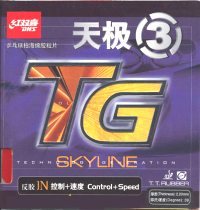
DHS Skyline TG3
|
Speed |
7.7 |
|
Spin |
9.2 |
|
Control |
9.0 |
|
Weight |
6.0 |
|
Gears |
7.0 |
|
|
Tackiness |
10.0 |
|
Throw Angle |
2.0 |
|
Sponge Hardness |
10.0 |
|
Overall |
8.6 |
|
|
Review of DHS Skyline TG3The DHS Skyline TG3 is an even more traditional Chinese rubber than its Neo counterpart as it is slightly firmer and slower, producing an even more subdued feeling on ball impact. FH drives are rock-solid but slow unless played with significant physical effort. I found myself using larger arm swings, greater hip rotation and/or greater acceleration through the ball than normal to compensate for lower inherent speed. In fact, I could take this to near-ridiculous levels and pound the ball, and still only produce moderate fast drives.
FH loops against backspin require a more open bat angle and/or faster acceleration through the ball, due to the rubber’s low throw angle, which otherwise renders it more likely for the ball to get caught in the net. Opening FH loops against heavy backspin generate high amounts of topspin but less than with the Neo counterpart. High-impact FH loops and loop-drives are powerful due to their long, low and...
Read our full review here: http://blog.tabletennis11.com/dhs-skyline-3-neo-3-60-review
Feb 15, 2018 |
|
|
DHS Skyline 3-60 Mid Hard
|
Speed |
7.5 |
|
Spin |
8.9 |
|
Control |
8.9 |
|
Weight |
8.0 |
|
Gears |
10.0 |
|
|
Tackiness |
10.0 |
|
Throw Angle |
4.0 |
|
Sponge Hardness |
10.0 |
|
Overall |
8.3 |
|
|
Review of DHS Skyline 3-60 Mid HardFH drives are controlled but they are slower than with the TG3 Neo. FH loops against backspin are easier to execute and have more clearance over the net than with the TG3 rubbers because the softer sponge results in a slightly increased throw angle. However, this, along with the 3-60’s low inherent speed, means that the trajectory is less dangerous. As expected, hard FH brush loops, loop-drives, and counter-topspins result in a flatter trajectory but seem to be less spinny than with the TG3 rubbers. Consequently, they have less kick and penetrating power. I found the Skyline 3-60 to be better suited for BH loops and banana flicks, where the tacky topsheet and softer sponge work well together to lift and spin the ball with a medium-high arc and plenty of safety over the net despite...
Read our full review: http://blog.tabletennis11.com/dhs-skyline-3-neo-3-60-review
Feb 15, 2018 |
Donic (2)
|
|
Donic Baracuda
|
Speed |
8.6 |
|
Spin |
9.0 |
|
Control |
9.1 |
|
Weight |
6.0 |
|
Gears |
10.0 |
|
|
Tackiness |
2.0 |
|
Throw Angle |
10.0 |
|
Sponge Hardness |
5.0 |
|
Overall |
8.0 |
|
|
Review of Donic BaracudaThe Baracuda has a neutral feel on FH drives - not too disengaged/numb but also not the most responsive rubber on the market. The first couple of FH drives quickly revealed that the Baracuda is not a speed monster. However, it still has sufficient power to enable mid-distance play. I have heard many fables of Baracuda's high throw angle, but in my opinion, it is only a medium to medium-high throw rubber. Looping is, nonetheless, quite pleasant - controlled and clearly the Baracuda's greatest strength. Read our full review at: http://blog.tabletennis11.com/donic-baracuda-rubbers-review
Mar 09, 2017 |
|
|
Donic Baracuda Big Slam
|
Speed |
8.4 |
|
Spin |
8.8 |
|
Control |
8.9 |
|
Weight |
4.0 |
|
Gears |
7.0 |
|
|
Tackiness |
2.0 |
|
Throw Angle |
10.0 |
|
Sponge Hardness |
5.0 |
|
Overall |
8.3 |
|
|
Review of Donic Baracuda Big SlamThe Donic Baracuda Big Slam is relatively light at ~46 grams when cut to a 157x150 mm blade. My impressions of the Baracuda Big Slam do not differ greatly from the regular version. It feels slightly softer, slower, and less spinny, especially on high-impact shots. Thus, the feeling on FH drives is solid but not particularly crisp. FH loops, on the other hand, do feel a little bit crisper due to the softer sponge, which also provides an audible click and a medium-high ball trajectory that gives sufficient safety over the net despite the moderate speed of the rubber. Read our full review here: http://blog.tabletennis11.com/donic-baracuda-rubbers-review
Mar 09, 2017 |
Gewo (6)
|
|
Gewo NanoFLEX FT40
|
Speed |
8.5 |
|
Spin |
9.3 |
|
Control |
9.3 |
|
Weight |
4.0 |
|
Gears |
10.0 |
|
|
Tackiness |
0.0 |
|
Throw Angle |
8.0 |
|
Sponge Hardness |
5.0 |
|
Overall |
8.7 |
|
|
Review of Gewo NanoFLEX FT40Given that the Gewo nanoFLEX FT40 is light and felt very soft in the press test I was expecting that it would play like a typical soft rubber. I was surprised by the FT40 right from the get-go. The feeling on FH drives is remarkably direct and responsive for a 40-degree rubber, especially when using the composite blade. A loud click is produced on more powerful loops and the ball has a medium to medium-high arc over the net, providing sufficient clearance and good table depth. The FT40 does not have a very pronounced catapult, which gave me the confidence to swing through the ball without holding back, something that I hesitate to do with other soft rubbers due to fear of hitting through the sponge and/or activating an excessive catapult. See more in our full review: http://blog.tabletennis11.com/gewo-nanoflex-ft48-ft45-ft40-table-tennis-rubbers-reviews
Jan 13, 2017 |
|
|
Gewo NanoFLEX FT45
|
Speed |
8.8 |
|
Spin |
9.1 |
|
Control |
8.6 |
|
Weight |
6.0 |
|
Gears |
7.0 |
|
|
Tackiness |
0.0 |
|
Throw Angle |
6.0 |
|
Sponge Hardness |
5.0 |
|
Overall |
8.4 |
|
|
Review of Gewo NanoFLEX FT45The Gewo nanoFLEX FT45 allows for respectable and reliable FH drives, loops, flat hits, and loop drives. While it certainly is not a Ferrari, it does have sufficient speed to finish off points. However, the feeling was not as crisp as with the FT48 when using the all-wood blade and I was a little disappointed with the FT45 when it came to looping against heavy backspin. My loops often seemed to remain stuck at the top of the net, while making it over with the FT48 (due to a faster sponge) or FT40 (due to higher throw). At times, it felt like the ball didn’t penetrate the topsheet quite as much as I would have liked. Switching to the slightly faster composite blade alleviated most, but not all, of these problems. See our full review here: http://blog.tabletennis11.com/gewo-nanoflex-ft48-ft45-ft40-table-tennis-rubbers-reviews
Jan 22, 2017 |
|
|
Gewo NanoFlex FT48
|
Speed |
9.2 |
|
Spin |
9.2 |
|
Control |
9.3 |
|
Weight |
8.0 |
|
Gears |
10.0 |
|
|
Tackiness |
0.0 |
|
Throw Angle |
6.0 |
|
Sponge Hardness |
7.0 |
|
Overall |
9.2 |
|
|
Review of Gewo NanoFlex FT48The FT48 weighed 51 grams when cut to my 157 mm x 150 mm test blade, which is similar to the Omega V Asia and MX-P. Exactly three seconds into the test, I knew the Gewo nanoFLEX FT48 was going to be a favorite of mine. The feeling on FH drives is direct and responsive, without an excessive catapult. The sensation and clicking sound produced when performing FH loops instill confidence. Loops have a medium-high arc that provides plenty of safety over the net and they are loaded with spin. Lifting backspin is a breeze with the FT48. The rubber has plenty of speed reserves to enable fun topspin-to-topspin rallies 8-10 feet behind the table - the FT48 is slightly slower than Tibhar’s MX-P and similar in speed to Xiom’s Omega V Tour. For our full review, see: http://blog.tabletennis11.com/gewo-nanoflex-ft48-ft45-ft40-table-tennis-rubbers-reviews
Jan 18, 2017 |
|
|
Gewo Hype EL Pro 47.5
|
Speed |
9.4 |
|
Spin |
8.4 |
|
Control |
8.1 |
|
Weight |
8.0 |
|
Gears |
7.0 |
|
|
Tackiness |
0.0 |
|
Throw Angle |
4.0 |
|
Sponge Hardness |
7.0 |
|
Overall |
7.5 |
|
|
Review of Gewo Hype EL Pro 47.5Frankly, I am a little bit mystified by this rubber. On one hand the Gewo EL Pro 47.5 is very hard and heavy for a European rubber, being slightly harder and heavier than Xiom’s Omega V Asia, Tibhar’s MX-P or Gewo’s nanoFLEX FT48 (52 grams cut to a 157 mm x 150 mm blade). However, the EL Pro 47.5 plays quite differently than any of these rubbers. First off, the EL Pro 47.5 feels remarkably squishy in game play for a 47.5-degree rubber. One sudden move and you unleash huge speed reserves. The catapult does not appear to be booster-based as is often the case with other ESN rubbers, but instead feels like a mechanical property of the sheet. This feeling remained similar regardless whether I used the all-wood or composite test blade. FH drives and loop drives generally felt ok, but I had a hard time judging how much power to put into the shots. For our full review, check the following link: http://blog.tabletennis11.com/gewo-hype-el-pro-475-425-40-reviews
Jan 22, 2017 |
|
|
Gewo Hype EL Pro 42.5
|
Speed |
8.9 |
|
Spin |
8.5 |
|
Control |
8.2 |
|
Weight |
6.0 |
|
Gears |
10.0 |
|
|
Tackiness |
0.0 |
|
Throw Angle |
4.0 |
|
Sponge Hardness |
5.0 |
|
Overall |
7.6 |
|
|
Review of Gewo Hype EL Pro 42.5Just like its harder-sponged cousin, the Gewo Hype EL Pro 42.5 felt squishy and bouncy during regular FH drives and loop drives. Once beyond a certain threshold – and I had a hard time determining exactly when – a strong catapult kicks in and if you are not prepared, it becomes difficult to keep the ball on the table. I found FH loops against backspin to be easier to execute than with the 47.5 version since the throw is a little higher with the 42.5 sponge. However, it is still only a medium-low throw rubber. I had the most success looping with the EL Pro 42.5 when using a lot of fast wrist action. This technique resulted in loops that were loaded with spin causing my opponents significant difficulties. Flat hits and blocking are slower than with the 47.5 version, but activation of the catapult still often led me to overshoot the table. For our full review, see: http://blog.tabletennis11.com/gewo-hype-el-pro-475-425-40-reviews
Jan 25, 2017 |
|
|
Gewo Hype EL Pro 40.0
|
Speed |
8.6 |
|
Spin |
8.8 |
|
Control |
9.0 |
|
Weight |
6.0 |
|
Gears |
10.0 |
|
|
Tackiness |
0.0 |
|
Throw Angle |
6.0 |
|
Sponge Hardness |
5.0 |
|
Overall |
8.3 |
|
|
Review of Gewo Hype EL Pro 40.0Given my experiences with the harder-sponged rubbers in this series, I was skeptical ahead of my test of the Gewo Hype EL Pro 40, especially because I tend to prefer harder rubbers. Interestingly, the EL Pro 40 turned out to be my favorite in this series. The rubber is not ultrafast but the sponge is sufficiently soft to allow the underlying blade’s character shine through more clearly, which resulted in harmonious set-ups with both the all-wood and composite test blades. The EL Pro 40 provides a responsive feel on FH drives and loop drives. A loud click is produced on FH loops, which helped me to appropriately adjust the bat angle. As with the rest of the Hype El Pro line-up, the rubber has a catapult that becomes very prominent on faster strokes. Read our full review: http://blog.tabletennis11.com/gewo-hype-el-pro-475-425-40-reviews
Jan 25, 2017 |
Nittaku (6)
|
|
Nittaku Fastarc P-1
|
Speed |
9.1 |
|
Spin |
9.2 |
|
Control |
8.8 |
|
Weight |
8.0 |
|
Gears |
10.0 |
|
|
Tackiness |
0.0 |
|
Throw Angle |
8.0 |
|
Sponge Hardness |
7.0 |
|
Overall |
8.6 |
|
|
Review of Nittaku Fastarc P-1The P-1, was specifically designed for use with the 40+ ball and features a “Tension Power Sheet and Strong Spongeâ€. It feels quite firm to the touch just as would be expected for a 47.5 degree rubber. It is also relatively heavy, weighing 50 grams when cut to the 157x150 mm test blade, which is similar to Xiom’s Omega V Tour (50 g) and Tibhar’s Evolution MX-P (51 g). Interestingly though, the P-1 feels quite soft and spongy in gameplay. FH drives were ok, but the ball penetrated the rubber a little deeper than I expected and thus emerged with a slight delay. The throw angle on forehand loops is quite high and provides plenty of arc and safety when looping heavy backspin balls over the net. I did, however, encounter occasional ball slippage. For our full review, follow this link: http://blog.tabletennis11.com/nittaku-fastarc-p1-g1-c1-s1-table-tennis-rubbers-reviews
Jan 11, 2017 |
|
|
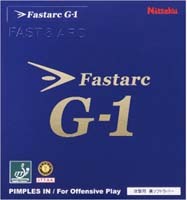
Nittaku Fastarc G-1
|
Speed |
9.4 |
|
Spin |
9.3 |
|
Control |
9.3 |
|
Weight |
8.0 |
|
Gears |
10.0 |
|
|
Tackiness |
0.0 |
|
Throw Angle |
8.0 |
|
Sponge Hardness |
7.0 |
|
Overall |
9.0 |
|
|
Review of Nittaku Fastarc G-1The G-1 feels similar to the touch as Xiom’s Omega V Asia but is two grams lighter at 49 grams when cut to my 157 x 150 mm test blade. After hitting the first couple of FH drives, it was pretty evident that the G-1 feels significantly firmer in game play than the P-1. The feeling on FH drives is very crisp and direct and there even is a hint of a clicking sound. FH loops feel great and are easy to execute. The throw angle on loops is medium high to high, providing plenty of clearance over the net. Unlike the P-1, I felt that the ball really bites into the sponge and topsheet, allowing me to impart high amounts of spin on my opening loops. Read the full review here: http://blog.tabletennis11.com/nittaku-fastarc-p1-g1-c1-s1-table-tennis-rubbers-reviews
Jan 12, 2017 |
|
|
Nittaku Fastarc C-1
|
Speed |
8.9 |
|
Spin |
8.9 |
|
Control |
8.9 |
|
Weight |
6.0 |
|
Gears |
10.0 |
|
|
Tackiness |
0.0 |
|
Throw Angle |
8.0 |
|
Sponge Hardness |
7.0 |
|
Overall |
8.7 |
|
|
Review of Nittaku Fastarc C-1The Nittaku Fastarc C-1 feels marginally harder to the touch than the P-1, which is surprising given the softer sponge and lower weight (47 grams, 157 x 150 mm). Although the topsheet and sponge architectures of the C-1 and P-1 are quite different (see the introduction), the two sheets feel very similar to me in gameplay except perhaps that the C-1 is slightly slower and less spinny and produces a less pronounced click on fast hits. The C-1 shares the spongy feel of the P-1 on fast FH shots. For our full review, see this link: http://blog.tabletennis11.com/nittaku-fastarc-p1-g1-c1-s1-table-tennis-rubbers-reviews
Jan 12, 2017 |
|
|
Nittaku Fastarc S-1
|
Speed |
8.4 |
|
Spin |
8.8 |
|
Control |
8.8 |
|
Weight |
4.0 |
|
Gears |
10.0 |
|
|
Tackiness |
0.0 |
|
Throw Angle |
8.0 |
|
Sponge Hardness |
5.0 |
|
Overall |
8.4 |
|
|
Review of Nittaku Fastarc S-1The Nittaku Fastarc S-1 is very soft to the touch, much softer than the 45 degree sponge would seem to suggest. It also only weighs 43 grams when cut to the 157 x 150 mm test blade, which is lighter than all other 40-45 degrees rubbers that I have tested. The topsheet seems very soft and I would be a little concerned how it holds up to scuffs and its durability. Almost instantly into my evaluation of the rubber, it becomes evident that the S-1 also is the softest and slowest of the Fastarc rubbers during gameplay, thus not fitting the “speed first†description very well. I could clearly feel the subdued woody feeling of the test blade when performing aggressive shots. See our full review here: http://blog.tabletennis11.com/nittaku-fastarc-p1-g1-c1-s1-table-tennis-rubbers-reviews
Jan 13, 2017 |
|
|
Nittaku Hammond Power
|
Speed |
9.1 |
|
Spin |
9.0 |
|
Control |
9.0 |
|
Weight |
8.0 |
|
Gears |
10.0 |
|
|
Tackiness |
0.0 |
|
Throw Angle |
4.0 |
|
Sponge Hardness |
7.0 |
|
Overall |
8.8 |
|
|
Review of Nittaku Hammond PowerThis is a solid and relatively non-flashy do-it-all rubber. Looping, flat hitting, blocking, touch play – all of these game facets can be executed well with this rubber, although it does not rise to best-in-category in any of them. While I only tested it as a FH rubber, I think this also could be used as a BH rubber for players who focus more on lower throw based play, i.e., hitting and blocking rather than looping. The TR4 reminds me of a slightly softer version of Xiom’s Omega V Asia, sharing its linearity, relatively firm feeling, and lack of spin sensitivity, but also its moderate spin levels.
Read our full review here: http://blog.tabletennis11.com/nittaku-hammond-power-review
Sep 27, 2017 |
|
|
Nittaku Hurricane Pro III Turbo Orange
|
Speed |
8.5 |
|
Spin |
9.6 |
|
Control |
9.2 |
|
Weight |
10.0 |
|
Gears |
10.0 |
|
|
Tackiness |
10.0 |
|
Throw Angle |
6.0 |
|
Sponge Hardness |
10.0 |
|
Overall |
9.1 |
|
|
Review of Nittaku Hurricane Pro III Turbo OrangeThe Nittaku Hurricane Pro 3 Turbo Orange is an interesting alternative for players who are used to traditional tacky Chinese rubbers such as the DHS Hurricane 3. A common critique of the H3 Neo is that it is too slow, and either requires great physical effort, a very fast blade, and/or treatment with boosters. The NHP3TO rectifies this to some degree by being slightly faster, while maintaining the overall characteristics that have propelled the Hurricane 3 rubbers to one of the most popular rubber series in the world, i.e., very high spin levels on serves and opening loops and good control in the short game. The tacky topsheet and dynamic sponge work well together in anything topspin-based, be it opening flips, opening loops...
Read our full review: http://blog.tabletennis11.com/nittaku-hurricane-pro-3-turbo-orange-review
Jan 29, 2018 |
Stiga (1)
|
|
Stiga Airoc M
|
Review of Stiga Airoc MStiga have definitely produced a high quality rubber which can produce a high level of spin with the plastic ball. The oxygen capsule system has allowed them to combine the properties of softer sponges into a more medium firm sponge. The result is a rubber which achieves longer dwell time, great spin and arc as well as superb control. While the rubber could be improved by adding a bit more power, the Airoc M is well suited for close and mid-range attackers and spin-control type players. The rubber has a higher throw angle and you can loop high arc balls with a strong margin of safety against both topspin and underspin.
This rubber is definitely great for those who are struggling to generate spin with the new ball and those who preferred softer rubbers with the celluloid ball but are now looking for something a bit firmer but with similar properties.
Read our full review at http://blog.tabletennis11.com/stiga-airoc-m-review
:)
Mar 08, 2015 |
Tibhar (8)
|
|
Tibhar Evolution FX-P
|
Speed |
8.6 |
|
Spin |
8.8 |
|
Control |
8.7 |
|
Weight |
4.0 |
|
Gears |
10.0 |
|
|
Tackiness |
2.0 |
|
Throw Angle |
6.0 |
|
Sponge Hardness |
5.0 |
|
Overall |
8.6 |
|
|
Review of Tibhar Evolution FX-PThe Tibhar Evolution FX-P is clearly the softest of the six Evolution rubbers and also the lightest at 46 grams cut to the 157 x 150 mm test blade. However, it feels significantly harder than other 40-degrees rubbers, such as the Gewo nanoFLEX FT40, and is only one gram lighter than the significantly harder-sponged Nittaku Fastarc C-1, Gewo nanoFLEX FT45, and Donic Acuda Blue P1. Read more at:
http://blog.tabletennis11.com/tibhar-evolution-series-table-tennis-rubbers-review
Dec 29, 2016 |
|
|
Tibhar Evolution EL-P
|
Speed |
8.7 |
|
Spin |
8.9 |
|
Control |
9.0 |
|
Weight |
6.0 |
|
Gears |
10.0 |
|
|
Tackiness |
2.0 |
|
Throw Angle |
8.0 |
|
Sponge Hardness |
5.0 |
|
Overall |
9.0 |
|
|
Review of Tibhar Evolution EL-PThe Tibhar Evolution EL-P feels quite soft to the touch – softer than MX-S, MX-P, and the EL-S rubbers, and more similar to Andro’s Rasant Grip. For a ~43-degrees rubber, it is quite heavy weighing 48 grams when cut to the 157 x 150 mm test blade. This puts it within one gram of the MX-P, Nittaku’s Fastarc G-1, and Xiom’s Omega V Euro and Pro rubbers. The first couple of FH drives quickly revealed that the EL-P is a level slower than the MX-rubbers and marginally slower than the EL-S, although shots played with greater arm acceleration seem to activate a prominent catapult giving the impression of high speed.
Read the full review here: http://blog.tabletennis11.com/tibhar-evolution-series-table-tennis-rubbers-review
Jan 07, 2017 |
NO IMAGE
Upload an Image
- No watermarks on image
- Will show after being validated
|
Tibhar Evolution FX-S
|
Speed |
8.7 |
|
Spin |
9.0 |
|
Control |
9.4 |
|
Weight |
6.0 |
|
Gears |
10.0 |
|
|
Tackiness |
0.0 |
|
Throw Angle |
8.0 |
|
Sponge Hardness |
5.0 |
|
Overall |
9.2 |
|
|
Review of Tibhar Evolution FX-SThe Tibhar Evolution FX-S feels quite hard to the touch for a 42-degree rubber, having a similar firmness as the EL-P. Consistent with this, it weighs 47 grams (157 x 150 mm), only 1 gram less than the EL-P and on par with rubbers such as the DHS Hurricane 3 Neo, Gewo nanoFLEX FT45, and Nittaku Fastarc C-1, which have significantly harder sponges. Hitting the first couple of FH drives with the FX-S, I immediately felt the potential for developing a soft rubber crush. Unlike many soft rubbers, the FX-S doesn't suffer from bottoming out effects, where the ball penetrates through the sponge to make contact with the blade, which can render soft rubbers unpredictable on very hard shots and blocks.
Read our full, in-depth review:
http://blog.tabletennis11.com/tibhar-evolution-series-table-tennis-rubbers-review
Dec 29, 2016 |
|
|
Tibhar Evolution EL-S
|
Speed |
8.9 |
|
Spin |
9.1 |
|
Control |
9.4 |
|
Weight |
8.0 |
|
Gears |
10.0 |
|
|
Tackiness |
0.0 |
|
Throw Angle |
8.0 |
|
Sponge Hardness |
7.0 |
|
Overall |
9.3 |
|
|
Review of Tibhar Evolution EL-STibhar’s Evolution EL-S feels slightly harder to the touch than the MX-P despite having a slightly softer sponge (~45 vs.~47 degrees), which suggests that a harder and denser topsheet is used in the S-series. In fact, it is similar in firmness to Xiom’s Omega V Tour and Gewo’s NanoFLEX FT48. Consistent with these impressions, the EL-S weighs 50 grams when cut to my 157 x 150 mm test blade, which is one gram more than the MX-P sheet and within one gram of the mentioned reference rubbers. Hitting the first couple of FH drives, it is immediately clear that the EL-S is a little bit slower than the MX-S and, in particular, the MX-P. Read our full review on this link: http://blog.tabletennis11.com/tibhar-evolution-series-table-tennis-rubbers-review
Jan 07, 2017 |
|
|
Tibhar Evolution MX-P
|
Speed |
9.5 |
|
Spin |
9.3 |
|
Control |
9.0 |
|
Weight |
6.0 |
|
Gears |
10.0 |
|
|
Tackiness |
2.0 |
|
Throw Angle |
4.0 |
|
Sponge Hardness |
7.0 |
|
Overall |
9.4 |
|
|
Review of Tibhar Evolution MX-PThe MX-P feels softer to the touch than Xiom’s Omega V Tour and more similar to the Euro version or Nittaku’s Fastarc G-1. It weighs 49 grams when cut to my 157 x 150 mm test blade, which is within one gram of the reference rubbers mentioned above. FH drives feel nothing short of marvelous with this rubber. The contact is crisp and produces a clicking sound that instills much confidence. The catapult is quite pronounced, which makes it tempting to take 1-2 steps away from the table and start hammering FH drives and flat hits with high speed. Read our full review at TableTennis11 blog: http://blog.tabletennis11.com/tibhar-evolution-series-table-tennis-rubbers-review
Jan 08, 2017 |
|
|
Tibhar Evolution MX-S
|
Speed |
9.2 |
|
Spin |
9.5 |
|
Control |
9.3 |
|
Weight |
8.0 |
|
Gears |
10.0 |
|
|
Tackiness |
0.0 |
|
Throw Angle |
4.0 |
|
Sponge Hardness |
7.0 |
|
Overall |
9.6 |
|
|
Review of Tibhar Evolution MX-SThe MX-S is the hardest version in the EVOLUTION range. It is particularly suited to players who employ a more physical action (acceleration of arm and wrist). Players using this style of play can release the enormous potential and consistent performance of MX-S both at the table and at half distance. The MX-S feels crisp and responsive on FH drives. The rubber’s medium catapult and OFF speed rating instill a desire to hit hard from mid-distance. The rubber produces a slight clicking sound and excellent feeling on forehand loops, which allowed me to make very angled shots with excellent control. I would characterize the throw angle as medium – enough arc to clear the net, even against heavy backspin balls. Read the full review here: http://blog.tabletennis11.com/tibhar-evolution-series-table-tennis-rubbers-review
Jan 08, 2017 |
|
|
Tibhar Aurus Prime
|
Speed |
9.6 |
|
Spin |
9.2 |
|
Control |
8.8 |
|
Weight |
6.0 |
|
Gears |
10.0 |
|
|
Tackiness |
0.0 |
|
Throw Angle |
8.0 |
|
Sponge Hardness |
7.0 |
|
Overall |
9.0 |
|
|
Review of Tibhar Aurus PrimeThis is definitively not a beginner’s rubber! Tibhar Aurus Prime reminds me of a faster, slightly spinnier, and more direct version of Nittaku’s Fastarc G1. It is at least as fast as Tibhar’s Evolution MX-P while having a higher throw and producing slightly less spin. No question: this is a rubber that is designed for high-level players with a modern aggressive game style. If I were to play with non-tacky FH rubbers again, Aurus Prime would be among my top 3 choices along with MX-P and MX-S. Read our full review here: http://blog.tabletennis11.com/tibhar-aurus-prime-and-aurus-select-review
Jul 31, 2017 |
|
|
Tibhar Aurus Select
|
Speed |
9.1 |
|
Spin |
9.0 |
|
Control |
9.0 |
|
Weight |
4.0 |
|
Gears |
10.0 |
|
|
Tackiness |
0.0 |
|
Throw Angle |
8.0 |
|
Sponge Hardness |
5.0 |
|
Overall |
9.0 |
|
|
Review of Tibhar Aurus SelectAll-in-all this is a nice, controlled, and forgiving rubber for the loop-oriented player, which also has a lot of potential as a BH looping rubber due to its softer nature. However, I found myself longing for higher spin values on high impact shots. The closest parallel that I can think of for Aurus Select is a less spinny version of Tibhar's Evolution EL-S or Xiom's Omega V Tour. Due to its controlled and forgiving nature, I could see a broad base of players use this rubber, including intermediate and advanced players, as well as kids. Read our full review here: http://blog.tabletennis11.com/tibhar-aurus-prime-and-aurus-select-review
Jul 31, 2017 |
Xiom (4)
|
|
Xiom Omega V Asia
|
Speed |
9.1 |
|
Spin |
9.0 |
|
Control |
9.4 |
|
Weight |
8.0 |
|
Gears |
10.0 |
|
|
Tackiness |
0.0 |
|
Throw Angle |
6.0 |
|
Sponge Hardness |
7.0 |
|
Overall |
9.2 |
|
|
Review of Xiom Omega V AsiaThe test setup gave a wonderful direct sensation during topspins, flat hits, and blocks, making it really delightful to play with. In fact, the Omega V Asia might be the best blocking rubber that I have tried. I would characterize the throw angle as medium – plenty of safety over the net when looping, and not too high allowing excellent flat hitting. The presence of a small catapult meant that I did not have to use as much effort in my strokes as with Chinese rubbers, but more than with the Omega V Tour or Tibhar’s MX-P. Read the full review: http://blog.tabletennis11.com/xiom-omega-v-pro-euro-asia-tour-reviews
Jan 16, 2017 |
|
|
Xiom Omega V Tour
|
Speed |
9.3 |
|
Spin |
9.1 |
|
Control |
9.2 |
|
Weight |
8.0 |
|
Gears |
10.0 |
|
|
Tackiness |
0.0 |
|
Throw Angle |
8.0 |
|
Sponge Hardness |
7.0 |
|
Overall |
9.1 |
|
|
Review of Xiom Omega V TourI developed a BIG smile after the first couple of FH topspin rallies. The Omega V Tour has the same direct feeling as the V Asia, but the slightly greater catapult allowed me to play faster shots with the same effort. Omega V Tour’s throw angle is slightly higher than Omega V Asia’s, resulting in a very pronounced arc over the net and excellent looping consistency. I applaud Xiom for getting the combination of throw and catapult just right with the V Tour. I have played with other high throw rubbers but often found their catapult effect to be too strong and/or inconsistent, resulting in many balls going long. Not so with the V Tour. For a full review, see: http://blog.tabletennis11.com/xiom-omega-v-pro-euro-asia-tour-reviews
Jan 16, 2017 |
|
|
Xiom Omega V Pro
|
Speed |
9.2 |
|
Spin |
9.0 |
|
Control |
8.4 |
|
Weight |
6.0 |
|
Gears |
7.0 |
|
|
Tackiness |
0.0 |
|
Throw Angle |
10.0 |
|
Sponge Hardness |
5.0 |
|
Overall |
8.1 |
|
|
Review of Xiom Omega V ProThe Omega V Pro feels noticeably softer than the Omega V Tour but slightly harder than Andro’s Rasant Grip (~45 degrees hardness on the European scale). It weighed 48 grams when cut to my 157 mm x 150 mm blade. Omega V Pro plays significantly softer than V Asia and V Tour, and also has a much more pronounced catapult effect. Being someone who has a fast forearm and who puts considerable power into his FH shots, I often found myself struggling to control the length of flat FH hits, with many balls flying off the table, leading me to lose confidence in my FH shots. FH drives and loops felt better and were associated with a loud click and plenty of safety over the net. Read the full review here: http://blog.tabletennis11.com/xiom-omega-v-pro-euro-asia-tour-reviews
Jan 17, 2017 |
|
|
Xiom Omega V Euro
|
Speed |
9.0 |
|
Spin |
9.1 |
|
Control |
8.3 |
|
Weight |
6.0 |
|
Gears |
7.0 |
|
|
Tackiness |
0.0 |
|
Throw Angle |
10.0 |
|
Sponge Hardness |
5.0 |
|
Overall |
8.2 |
|
|
Review of Xiom Omega V EuroThe sheet weighed 49 grams when cut to my 157 mm x 150 mm blade, which places it between Tibhar’s MX-P and Stiga’s Airoc Astro M. FH flat hits had a tendency to go long. Properly executed FH loops resulted in a nice crisp sound and beautiful arc over the net. Soft, touch-based loops from mid-distance are encouraged over hard loop drives. Opening loops against backspin are easy due to the high throw but it is hard to generate high speed, which makes it possible for the opponent to get into position and attack the slow loop. See our full review: http://blog.tabletennis11.com/xiom-omega-v-pro-euro-asia-tour-reviews
Jan 17, 2017 |