qvoliszz's Rubber Ratings
Back to qvoliszz's ProfileHere are qvoliszz's ratings and reviews. These ratings are useful because qvoliszz has his/her own standard and will rate and review the ping pong equipment accordingly, giving you accurate and useful ratings and reviews to aid you in your next online purchase.
61 Second (2) 
 |
61 Second Lightning DS (Non-tacky)
|
||||||||||||||||||||||
Review of 61 Second Lightning DS (Non-tacky)Hello All! I am experimenting nowdays and I tried this rubber on a Yinhe Venus 16 blade. This rubber is like a Sriver. I bought one sheet for $9. For Euro/Jap style chinese rubbers my standard is the Palio AK 47 RED. It costs ~$10 and gives more performance. This rubber is slow, but at least it has a decent feeling. I tried it on backhand. My problem was, that balls easily fall out of the rubber compared to the AK47, M1, Omega 5 and T05. Serving is really good due to the slight tackiness and the lack of catapult. Flat strokes are also good. Looping is tricky, you must have a developed technique to generate spinny and fast balls. ?dropshots are also good, the rubber absorbs considerable amount of tempo and spin. So for this price I would go for a Palio AK47 RED/YELLOW/BLUE. If you wish to learn table tennis, and love the vibrant colours of this rubber (blue sponge and lively red topsheet), try this.Mar 24, 2021 | |||||||||||||||||||||||

NO IMAGEUpload an Image
|
61 Second Eagle
|
||||||||||||||||||||||
Review of 61 Second EagleI tested the soft version of the 61Second Eagle, among other setups on a Yinhe CN1S Children's Soft Carbon blade. This is an inexpensive Chinese rubber that could be bought for around $10, and I think it deserves to be judged in that context.The Eagle tries to offer something resembling the character of a European offensive rubber. Its topsheet is relatively firm and grippy, but definitely not tacky in the traditional Chinese sense. The overall speed is modest, perhaps even a little on the slow side, and it does not have the explosive response of a modern high-end tensor. What it does offer is a straightforward, reasonably honest feeling on contact. You get useful feedback from the ball, and the rubber does not hide poor technique behind an excessive catapult effect. That makes it a very good learning rubber. A beginner can practice virtually all the basic strokes with it, including topspin, blocks, pushes and simple attacking shots, without having to fight the equipment. It is not a rubber I would choose for serious competitive play, but that was never the point. For someone just starting table tennis, or playing purely as a hobby, it provided more than enough performance for the money. I would not put it in the same category as some of the big brands' cheapest introductory rubbers. In my experience, many of those offer so little useful feedback or playing quality that they are poor tools for actually learning the sport. The Eagle, despite its tiny price tag, is a proper, usable rubber. There is a difference between cheap equipment and equipment that is simply bad. There is also a practical limitation today: the ITTF approval for the 61Second Eagle (115-006) was listed as expiring on 30 June 2025. Oct 13, 2026 | |||||||||||||||||||||||
Butterfly (3)
 |
Butterfly Dignics 09C
|
||||||||||||||||||||||
Review of Butterfly Dignics 09CI have tried the Dignics 09C on several rather different blades: an XVT inner-fiber ZLC, an XVT Hinoki ZL Carbon, a Butterfly Viscaria, and a Butterfly Amultart. In my opinion, this rubber represents one of the more meaningful developments in the European/Japanese approach to table tennis rubbers.The idea behind it is simple enough: bring the linearity, grip, and short-game control of a Chinese-style forehand rubber closer to players accustomed to European tensors. To someone raised on lively European rubbers, a traditional unboosted Chinese forehand rubber can feel almost dead. It has little free catapult, and you have to generate most of the pace yourself. Dignics 09C offers a more accessible middle ground without completely abandoning that Chinese philosophy. It combines a very hard Spring Sponge X with a somewhat softer-feeling, highly grippy and tacky topsheet. The topsheet takes some of the harshness out of the impact, but this is still a demanding rubber. On delicate shots, you mainly feel the surface working. Once you put more energy into the stroke, the sponge starts contributing properly. What impressed me is how smoothly that transition happens. It does not suddenly switch into a wildly different gear; its response remains relatively linear and predictable. This also helps avoid the feeling of bottoming out that I have experienced with some softer European rubbers. With those, there can be a point where hitting harder stops producing a useful increase in performance. The 09C gives you more room to accelerate, provided you have the technique and physical input to use it. It certainly does not do the work for you. Oct 13, 2026 | |||||||||||||||||||||||
 |
Butterfly Tenergy 05
|
||||||||||||||||||||||
Review of Butterfly Tenergy 05I've known and played with Tenergy 05 for a very long time, so this is more of a long-term observation than a first-impression review.Tenergy 05 is a fast attacking rubber with a very strong built-in catapult effect. The ball practically shoots off the racket. That lively response is exactly what I don't like about it: for my game, the catapult is simply too pronounced. It is especially noticeable when opening with topspin, where you need really clean ball contact to keep the shot under control. The rubber can deliver plenty of pace, but it doesn't give me the more restrained, predictable response I prefer. Another issue is how the product has changed over the years. In my experience, both its quality and its durability have deteriorated compared with earlier versions. That matters to me just as much as its playing characteristics. I can see why players who like a very lively, fast rubber enjoy Tenergy 05. Personally, though, the excessive catapult and my experience with its declining durability make it a poor fit for my preferences. Oct 13, 2026 | |||||||||||||||||||||||
 |
Butterfly Zyre 03
|
||||||||||||||||||||||
Review of Butterfly Zyre 03I tested a black ZYRE-03 on a Butterfly Franziska Innerforce ZLC, with Dignics 80 on the other side. That gave me a useful direct comparison on the same blade.My first thought was rather unexpected: this feels like a Tenergy 25 on steroids. The throw angle is extremely high. The difference is that, while Tenergy 25 always felt somewhat sluggish to me and was mainly suited to aggressive close-to-the-table play, ZYRE-03 has the speed of a modern high-performance tensor. It has enough power to play from mid-distance without feeling limited. The catapult is extremely strong, but also surprisingly consistent. Rather than wondering when it will kick in, I feel that it is practically always there. In that sense, the rubber is more predictable than I expected. Unfortunately, predictable catapult does not automatically mean easy control. ZYRE-03 has an extremely demanding throw angle and is very sensitive to both racket angle and incoming spin. The ball seems to leave the racket immediately, so there is very little room to correct a less-than-perfect contact. The difference was obvious when I first tried the setup. I started on the Dignics 80 side, looping and counterlooping comfortably without mistakes. Then I turned the racket around to ZYRE-03, and my first counterloops went roughly a metre (3feet) beyond the table. That is how dramatic the adjustment felt to me. I have said before that Tenergy 05 requires good technique and high-quality contact. For my level, I would describe that as needing something like an 80% quality stroke to execute the more difficult attacks reliably. With ZYRE-03, it feels closer to 95%. Of course these are not measurements; they are my way of describing how narrow the margin for error feels. You almost have to execute textbook strokes every single time. Its speed and spin potential are remarkable, but the rubber seems to amplify mistakes just as efficiently as it amplifies good strokes. Oct 13, 2026 | |||||||||||||||||||||||
DHS (1)
 |
DHS Tin Arc
|
||||||||||||||||||||||
Review of DHS Tin ArcHi All!Since there were no full reviews here I post one. DHS TinArc is a mix or Euro and Chinese feel, closer to the latter. I recommend boosting it a little. So in terms of speed the boosted version is bit faster and springier, than the unboosted and both has a wide dynamic range. It can feel dead when hitting with little force, but it comes live when you hit with medium to full power. Throw angle is the same, quite low on slow loop storkes, which opens up to a medium high/high throw when using the correct technique. I had no problem with it after MX-P. I would say this sheet is a tempo slower then MX-P on full power, but three tempo slowen when playing passively. It feels more chinese then MX-P, in terms of topsheet contact. I tried it on a Butter ZJK ALC (2012, blue dragon) and a Yinhe Venus 14, both OFF- looping blades. I would say speed is near the Bluefire M2, but way more stable when counterlooping, and it does not bottom out. To be honest the rubber can be fast because of the sponge, but it only represents your technique and power without tensor or catapult effect. Some say to this, that this rubber is dead... no it is only different. I would recommend this rubber to an ALL/OFF- player as a DO IT ALL rubber. Easy to drop, to smash, to counterspin, to first spin. Can be used to chop, over the table underspin game. The spin is totally OK, when brush looping or when doing the european loop (just need to open the angle and squeeze the ball a bit more) and the result will be a killer finising loop. To place this rubber in the whole picture, it is a CHINESE LIGHT rubber, if an euro player want's to try some cheaper chinese stuff go for this. If I compare it to chinese rubbers this one is a quality product, a bit more lively then the others. Weight is 62g in max square, around 50g on a 159*150 butterfly head shape. Stickyness: I can throw the ball up to 50 cm with it, ( BF M2 lifts 20 cm) so it is similar to MX-S or BF JP series. Sep 13, 2016 | |||||||||||||||||||||||
Donic (16)
 |
Donic Bluefire M3
|
||||||||||||||||||||||
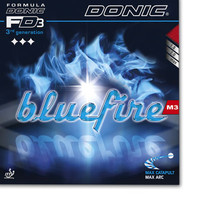
Review of Donic Bluefire M3The Bluefire series from Donic tries to be an alternative to the famous (and expensive) BF Tenergy. Well more or less Donic did the job. I agree and can only repeat what others say that every person feels the pros/cons a bit different because they play different.My experience was the following. M3 has a really good looping arc, huge. Smashing is quite nice. It is easy to control the spin amount of the ball and hit "empty" balls with loop like hits. Chopping and passive chopping, lifting is easy. Had to adjust dropping but it is easy now. Passive play is really good and the rubber is quite forgiving for little mistakes. So to summerise pros: you can loop every ball and attack till midrange. There is difference between the black and the red rubber surface after a year: black topsheet remains softer red is a bit harder. The rubber surface looks grainy when it is new, after some play when this surface comes off some of the soft grip is lost, so you have to hit the ball a bit harder to loop efficiently. So to summerise hit it hard and everything will be just fine. Or get an OFF- blade and hit just a bit less hard. Finally I have finished the testing of the rubber. After 300 hours of effective table tennis, including 3 training camps, 30+ competitions and 4 regluing all I can say that this rubber is good. The loss of the grip is quite little, you can easily adjust without noticing. The rubber plays good on OFF- stiff to spin-elastic blades. I Used int on my BH, dropping and opening loops were still awsome. Chiqita and smash hits were a bit harder with the rubber getting older. The rubber should be still good to play or practice but my hand is really swetty and the topsheet of the rubber finally gave in, it melted at the top of my index finger. The Rubber is very durable, the edges are intact, no tears on it. The surface is worn by many hits and loops, but the sponge is in quite good shape. Feb 10, 2015 | |||||||||||||||||||||||
NO IMAGEUpload an Image
|
Donic Bluefire JP 01
|
||||||||||||||||||||||
Review of Donic Bluefire JP 01I have switched from Bluefire M3 and M2 to JP01 on my FH. I was not dissapointed. In my country the rubber costs around 33-40$, while Tenergy is 67-74$.I really loved T05 but was not really satisfied with the price and the springiness of the rubber. I wanted some rubber with same spin, a bit less springiness and a bit less speed. One thing that I instantly realized, that the surface of the rubber is slightly tacky, which actually grants you the ability to attack on every ball, just as you did on the tenergy. Throw angle is quite low because of the rubber seems to be a bit less responsive/bouncy, than T05. What this means is that you have to adjust the blocking angle of the racket, then you will realize, that directing the ball is easier when blocking. Brushing the ball when looping is a bit more better, the ball stays on a bit longer. For service recieve this rubber is better than the T05, because it tolerates some amount of errors. When I was playing with T05 I recognised, that spinless counterhits and chops are hard to do with T05. Chops come of the rubber in a lower arc and you can not "push" a chop passively, because it will go into the net. Counterhits are often inaccurate because of the springyness. With the bluefire series I find counterhits way more easier, and chops and chop pushes easier too. My opening loops and finishing loops are very spinny (just as T05) so most of the blocks actually fly off the table. I did found that M series is more suited to a smasher type and JP series is to a looper type gameplay. I use Waldner Senso Carbon (3+2, off-) blade, and I am fine 0,5 to 3 meters from the table. Sep 16, 2014 | |||||||||||||||||||||||
NO IMAGEUpload an Image
|
Donic Bluefire JP 03
|
||||||||||||||||||||||
Review of Donic Bluefire JP 03Another great rubber from Donic to address the Tenergy series. This rubber is a nice T05 FX substitute. Sponge hardness looks the same, but the springiness is a bit less, which makes this rubber a more controlled type of 05FX. Works well on flexible and hard blades. The rubber is very linear and the overall feedback and feeling is very good. Blocks are very low and short, but they go over the net. Service and chopping is very spinny, but not bouncy, so you can keep the ball low. Smashes and counterhits are precise and linear. Loops are satisfying, no matter what is your looping style. The spin of the loop can be easily controlled, this rubber has significant dwell time, but not very sensitive to incoming spin. So looping and counter looping is a very consistent. Opening loops are very spinny, no matter what ball you try to attack. Durability is an another question. The overall manufacturing and quality is high, but since the rubber is tacky, the question is, how long does the tacky surface last. I used 5 JP series rubbers and came to the same result. Nearly 30 hours of gameplay and the surface becomes worn and the tackiness is gone from your sweet-spot. After this the rubber is still functional, but your sweet-spot becomes less lethal weapon. But you may use the sheets for training, because they last a long time. But this why I went back to the M series, because their topsheet can handle 60 hours before the first sign of wearing.Mar 16, 2015 | |||||||||||||||||||||||
 |
Donic Bluefire M2
|
||||||||||||||||||||||
Review of Donic Bluefire M2I upgraded from M3 to M2, I have used it on both sides, I also boosted one of them, and used one unboosted too.There where some comparisons on other sites with T05. Well I only can confirm that the speed is similar, and the spin in loops (counter, openig, normal) are similar too. But I don't personally think that this rubber is a Tenergy substitute. M2 has a bit lower throw than M3 but still higher than T05. It seems to be less springy. Smashes and hits are way better then T05, the rubber feels more controlled because the longer dwell time. This rubber is a very good rubber for attacking game from ALL+-to OFF characteristics. The sheet works well on spin elastic to hard blades. On harder blades it feels a bit more mushy. Boosting this rubber can give more speed, springiness and spin, but out of the package it contains a factory tuning. Also there is a slight loss in control if you boost. The red topsheet is chemically a bit less stable, so after 200 hours the rubber topsheet degrades and dissolves/melts. This process is speeded up by booostering, hand swet and hard repetivite pressures on the same spot of the rubber. The black topsheets last longer. So note that if you boost this rubber and you are a swetty person this rubber will last only 6 months in red colour. Unboosted black rubbers can be with you for 300 hours of play. On spin elastic blades better for BH, on hard blades both sides. Mar 16, 2015 | |||||||||||||||||||||||
 |
Donic Acuda Blue P2
|
||||||||||||||||||||||
Review of Donic Acuda Blue P2Bluefire JP was good and Acuda was good also, but this product merges them and makes a better combo. To be honest the JP series was not as successful as M series, their topsheet wore off quickly, so this is a reboot for JP series in my opinion. The sponge is the same as the JP series, the topsheet is very similar to the Acuda series. I tried it both sides and loved it. I play with M2 and the throw was sufficient, the speed was better, the spin is awesome. The rubber is not very sensitive for incoming spin like Tenergy, bounces a bit less, and the speed is the same. Control and drops are flatter, but do not go into the net.Overall, if you want to upgrade from Bluefire JP buy this, if you want to be more aggressive, than Bluefire M, buy this. If you want a bit more spin, speed and control than Acuda, buy this. UPDATE So I finally came to the conclusion, that this rubber has some faults. First of all the surface becomes worn before 20 hours of play. Does not have enough power on an OFF blade to effectively counterloop from mid distance, (boosted or unboosted). Spin sensitivity was disturbing when I counterlooped, could not adaptate to it. Most of my shots were too long or too short. This consistency problem was not experienced, when I turned my blade to use M2 on my FH. So I returned to my old and slow MX-P. This rubber is good for backhand, for forhand try the harder P1. UPDATE: The main problem was the catapult effect of the rubber, which is not linear, and bottoms out very quickly. To be effective with this setup, please use a pure wood plade with ALL-OFF tempo and play an aggressive looping game, with setting up the point, because you can't hit winner mega power shots with this rubber. Jul 20, 2016 | |||||||||||||||||||||||
 |
Donic Baracuda
|
||||||||||||||||||||||
Review of Donic BaracudaThese days the game is changing, due to next season all league matches will be played with poly balls in my country, from amateur to pro. (Pro matches are played from 2014 with poly balls). Blades are getting stiffer stronger with more power, and rubbers are getting slower, softer and bit grippier. So I chose this rubber for my Donic World Champion 89 Waldner blade. Softer Big Slam for BH and normal for FH. The setup is amazing. Firstly I would like to point uut that I use the rubber unboosted, but probably will boost, when the rubber's preformance will decrease. The setup has a really nice ALL+/OFF- speed, with enormous control. Though the rubber is spin oriented, it functions very well in other strokes. The spin is the same as Tibhar MX-P, bit more than M2. Speed is slower, when playing, but the blade has that OFF power, when I smash. The rubber is very linear, my opponents say, that it is a bit easier to play against, than MX-P, because MX-P is more faster and rougher. But because of the control I can do counterspins to every loop, with decent speed. Spin sensitivity is very forgiving. My Blade is 92,4 gr, with rubbers it is under 180, which is considered a medium/light blade. No wonder why this rubber is so popular: good price, good quality, outstanding performance and controlled speed.Jan 25, 2016 | |||||||||||||||||||||||
 |
Donic Baracuda Big Slam
|
||||||||||||||||||||||
Review of Donic Baracuda Big SlamThese days the game is changing, due to next season all league matches will be played with poly balls in my country, from amateur to pro. (Pro matches are played from 2014 with poly balls). Blades are getting stiffer stronger with more power, and rubbers are getting slower, softer and bit grippier. So I chose this rubber for my Donic World Champion 89 Waldner blade. Softer Big Slam for BH and normal for FH. The setup is amazing. Firstly I would like to point uut that I use the rubber unboosted, but probably will boost, when the rubber's preformance will decrease. The setup has a really nice ALL+/OFF- speed, with enormous control. Though the rubber is spin oriented, it functions very well in other strokes. The spin is the same as Tibhar MX-P, bit more than M2. Speed is slower, when playing, but the blade has that OFF power, when I smash. The rubber is very linear, my opponents say, that it is a bit easier to play against, than MX-P, because MX-P is more faster and rougher. But because of the control I can do counterspins to every loop, with decent speed. Spin sensitivity is very forgiving. My Blade is 92,4 gr, with rubbers it is under 180, which is considered a medium/light blade. It does not feel squishy on this stiff blade, ideal backhand rubber for spin oriented attacker or dropper style of play. Gives freedom of ball handling sacreficing a little speed, but gives huge spin in return.Jan 25, 2016 | |||||||||||||||||||||||
 |
Donic Bluefire M1
|
||||||||||||||||||||||
Review of Donic Bluefire M1Please read SEGUSO review. Slupsalaht may have a technique problem with his/her hits. I also tried MAXXX 500, T05, MXP, MXS and M2, M3, JP1, JP3... My main opinion was to find a rubber that is an attacking and aggressive rubber and less bouncy than T05, a bit more lively than MXP, more Lively than MXS, bit lighter than MAXXX500, and a bit more powerful, than other DONIC rubbers mentioned above. My blade is a Waldner WC '89, and M2 feels a bit mushy and unreliable at high power, MXP does also this when counterlooping from far away with full power. On this blade M1 is more spinnier than a T05 on a normal OFF- ALC limba or koto blade with kiri core blade and lifts the ball more. Also It preforms better in soft loops than MXP. As far as I could see the sponge of MXP and M1 only differs in the coulour. The softer topsheet of the M1 makes the real difference. I really do like the M product line of donic, because they last long. When kept clean the rubber has a really nice grip, and wears off after 250 hours of use. What I find as a negative effect, that the rubber dulls after a month or a bit more because the booster expires. This is also noticable with MXP, so occasional preservative boostering is needed to uphold the "out of the packege" performance.Oct 16, 2016 | |||||||||||||||||||||||
 |
Donic Bluestorm Z1
|
||||||||||||||||||||||
Review of Donic Bluestorm Z1Hi All! Since there is little information on this rubber, I will share my initial impressions with you, based on some hours of playtime. These new ultramax series rubbers are the next generaion of rubbers that are truly ment for poly balls. Long time have I seen those flight curves of the balls, reminds me of the old days of celluloid balls. This Bluestorm Z1 is the next big step, which has a 47,5 degree sponge (similar to JP series) a non tacky surface. The first impressions which amazed me: easy to attack close to the table, easy to counterloop and dropshot. The rubber is very fast and requires precise timing with good technique. To be honest I recommend this monster to those, who are playing an all out attack and are experienced players. Recreational, hobby, and mediocre players cannot tame this rubber. If you want to simply describe this rubber, I would say that this gives more speed and aggressiveness than T05, it feels a bit harder, but revards more. I would say that Z1 exceeds T05. For a controlled solution please try Z2, which resembles the bluefire M1, a bit faster and same sponge.Aug 15, 2017 | |||||||||||||||||||||||
 |
Donic Bluestorm Z2
|
||||||||||||||||||||||
Review of Donic Bluestorm Z2UPDATE! Hi All! I have been testing this rubber on both sides for a time now I loved it on FH and BH too, before that I was using M1. This rubber is faster, than M1, has a bit lower throw in some cases and feels more spongy due to the 2.33 mm thick sponge. Now I use it on both sides. Compared to the M1 in different strokes: Looping is more dynamic, easily varied and more aggressive, due to the spongy feel, riskier highly rewarding shots can be played close and far from the table. Really like FH and BH flicks. Counterlooping is the most notable feature of this rubber as it is very solid and fast. Dropshots are bit tricky, don't do passive blocks always direct the ball with small movements. Counterhits are good as any, the rubber feels a bit spongy, the throw is lower, but stable. The main DIFFERENCE is this spongy characteristic! Fine touch and passive strokes are harder to get used to, because the balls will fly further than intended. With this rubber you have to be more dedicated to the shot/touch to engage the sponge of the rubber to get the control over your shots. If you just hold your racket passively when handling the ball, you won't get any good results. But when you hit the ball correctly you can feel it sinking in the sponge and can immediately feel the control of your ball. Due to the spongy feeling you may feel like you are playing with the old 40 mm celluloid ball, but with a new 40+ poly. So to describe this rubber I may say that this is an M1 mixed with an Acuda Blue, a Rosena in beast mode, a T05 with more dwelltime and speed. Can recommend it to an allroud looping attacker, not for chopping but pushes are loaded with backspin. Excellent for different looping styles. Speedwise I was playing with a Waldner WC '89 OFF blade with M1, had to put that blade down bacause was not able to hit the ball on the table. Had to go to an OFF- blade to get the same speed. So take note, that this rubber is really one tempo faster!Sep 12, 2022 | |||||||||||||||||||||||
NO IMAGEUpload an Image
|
Donic BlueGrip C2
|
||||||||||||||||||||||
Review of Donic BlueGrip C2Hi All! I went out ot test this rubber. After 40 hours of play, here are my conclusions. This rubber is an european style chinese rubber (it has some catapult, and flat hits don't go down). If you press it on the ball it can lift the ball 1-2 cm when new. The sponge is 50 degrees but the rubber is softish, it grabs the ball firmly. If you play with a modern tensor rubber small adjustments are needed. For those who love Nittaku Fastarc G-1, this is definetly an upgrade. It is a bit more lively and a bit more aggressive considering loops. Due to the hard sponge you should have a good technique, to use this rubber. A decent force is required to engage the sponge, but then it will be a very high quality shot. The spin and the curve is enormous, the harder you hit, the more spin is generated. Compared to the standard 47,5 degree european rubbers, that I usually overpower at 80% of my power, this Bluegrip C2 is stronger than me. No matter how hard I loop, if I add more power my balls aren't getting longer. So it is really revarding if you are a looper. You can loop with and without engaging the sponge. What is good: - over the table opening, short powerful strokes, loops, counterloops, overpowering the ball/your opponent, service. What is bad: spin sensitivity, counterloop over the table, out of position shots. After some training I could not figure out how to play aggressively against a chopper, with M1 I could do what I want and how I want, but with C2 I can only lift the ball, I can't kill it. Over the table counterlooping requires a considerable amount of force compared to M1 or Z2. Overall bigger stokes are required for most strokes, because you must engage the sponge and use closed bat angle. If you play lightly you must open your bat and play your strokes vertically. So for someone, who is educated, this is a weapon for intermediate or hobby players this will be a curse. I used it on Viscaria and YinHe DK4.Sep 16, 2021 | |||||||||||||||||||||||
 |
Donic Bluestorm Pro
|
||||||||||||||||||||||
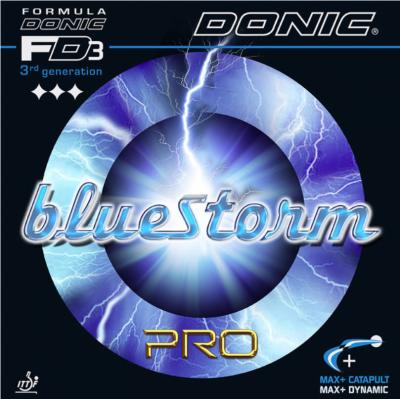
Review of Donic Bluestorm ProHi All! I have played with this rubber on my forhand for more, than 3 months. This is indeed a PRO version. This means, that the packaging was drenched in oil, I have never seen a rubber so heavily facory boosted. The cover sheet was totally soaked in oil. Even the sponge is 50 degrees it felt like 47. So what this rubber can actually do? It tries to be a merge between Bluefire M1 and Bluestorm Z2. It takes gears and short game over the table game from M1 and combines, that with the common Z2 feeling. In addition this rubber is fast, like MX-P, T05 fast. When the boost wears off, you must reboost. Also it carries the curse of Z2, the throw angle is only Medium, so you must play above the table level if you want speed. All-in-all this is a good rubber if you are a PRO and can afford to switch it every 2-3 months. It demands good technique and quick movements. Due to the heavy boosting, the durability is only average, if reboosted, it works just fine. Only consider this rubber if you are an advanced of professional player and a big DONIC fan. Tried it with YinHe DK-4 and DONIC Ovtcharov True Carbon.Sep 12, 2022 | |||||||||||||||||||||||
 |
Donic Bluestorm Pro AM
|
||||||||||||||||||||
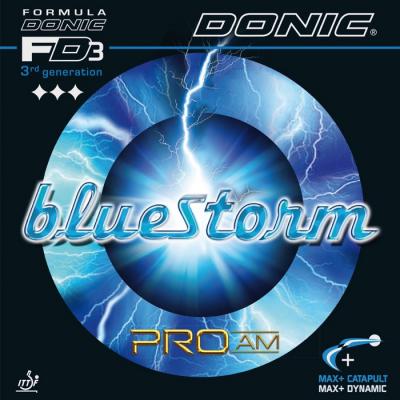
Review of Donic Bluestorm Pro AMHi All! I have played with this rubber on my Backhand for more, than 3 months. This is indeed a PRO version. This means, that the packaging was drenched in oil, I have never seen a rubber so heavily facory boosted. The cover sheet was totally soaked in oil. I really welcomed this rubber, as I loved the M1 and played with Z2 at least for a year. Z2 had way less spin and arc, but it was kind of stable. This rubber is a true upgrade to Z2. It feels a bit more rigid, has a bit more arc, more spin and a bit more speed. Due to the heavy tooning it must be reboosted. If you like Z2 and need a bit more direct and aggressive version of it, thy this. I played with it mainly on BH. Tried it with YinHe DK-4 and DONIC Ovtcharov True Carbon.Sep 12, 2022 | |||||||||||||||||||||
 |
Donic Acuda Blue P1
|
||||||||||||||||||||||
Review of Donic Acuda Blue P1I tested the Acuda Blue P1 for approximately four or five training sessions on a Butterfly Harimoto ZLC blade. By that point I already had plenty of experience with the original Acuda S series, so I was interested in finding out whether the Blue P1 was a genuine step forward or simply a different interpretation of a familiar formula. Unfortunately, I found it to be a step backward.My biggest problem was the lack of a clear, defined feeling on contact. Hitting the ball felt almost like hitting it into a gummy candy: soft, vague, and with very little useful feedback. Close to the table and at mid-distance it was reasonably playable, but nothing stood out. Farther from the table, it started to feel distinctly underpowered. For something positioned as an offensive rubber, it never gave me the decisive attacking response I was looking for. The original Acuda S family was not perfect, but it had character. I particularly liked the S1 Turbo and S2; even the S3 was a perfectly respectable rubber. The standard S1 was probably the weakest of that range for me, yet all of them were fundamentally usable attacking rubbers. I expected the revised sponge and topsheet geometry of the Blue P1 to build on that foundation, especially for the plastic-ball era. Instead, the changes seemed to work against each other. Although the P1 has a nominally 47.5-degree sponge, its topsheet felt too soft for that sponge. On impact, I could feel the topsheet yielding first, followed by a delayed and poorly integrated response from the sponge. The result was not a satisfying, unified rebound. Sometimes the ball seemed to drop off the racket unexpectedly. At other times, a stroke that should have produced a powerful, high-quality attack gave me little more than a modest increase in speed. Extra pace is not particularly useful if the quality and reliability of the shot are missing. Overall, the Acuda Blue P1 was a clear disappointment. After four or five sessions, I had seen enough and moved on. Oct 13, 2026 | |||||||||||||||||||||||
 |
Donic Acuda S1 Turbo
|
||||||||||||||||||||||
Review of Donic Acuda S1 TurboTo me, the S1 Turbo fixes the main shortcomings of the regular S1. The S1 can feel a little underpowered and inconsistent, particularly when you move away from the table. The Turbo has a more assertive and dynamic character without becoming difficult to control.It is a relatively heavy rubber with a 50-degree sponge on the EU scale. That sounds quite hard, but the softer-feeling topsheet makes it less brutal. The ball seems to sink into the topsheet for a moment before being released, giving me a reassuring sense of contact and time to adjust my strokes. For a tensor, its response is surprisingly predictable. The catapult is there, of course, but it is restrained at low impact. You have to put some effort into the ball to wake the rubber up. I really like this behaviour: short pushes, drops and even improvised defensive touches are easier to keep short than with many more lively Euro/Jap rubbers. I also find the S1 Turbo relatively insensitive to incoming spin. As you increase the effort, the speed builds up smoothly rather than arriving in one sudden kick. It is not as linear as a traditional Chinese rubber, but by Euro tensor standards it comes remarkably close. In that particular respect, it even reminds me of the more controlled behaviour people look for in modern hybrids. Spin generation is excellent, and so are loops, counterloops and counterdrives. The slightly longer-feeling contact gives me room to vary the pace and spin instead of having to commit to the same stroke every time. The throw angle is medium to medium-high, although the blade underneath makes a noticeable difference. Opening against heavy backspin feels safe, but on a conventional outer-ALC blade I need to drive through the ball more decisively. On an all-wood or inner-composite blade, softer and slower openings are much easier to execute. Blade pairing matters here. I would lean towards a reasonably stiff, at least OFF- all-wood blade or an inner-composite construction. Oct 13, 2026 | |||||||||||||||||||||||
 |
Donic BlueGrip J2
|
||||||||||||||||||||||
Review of Donic BlueGrip J2I tested the BlueGrip J2 on two outer-composite blades: the Donic Zhang Jike Original Carbon, which has a slightly stiffer Viscaria-like character, and a Stuor clone of Butterfly's 70th Anniversary Hinoki/ALC construction with a Kiri core. Both are fairly direct blades, and that certainly influenced my impressions.The J2 is a modern offensive hybrid rubber with a distinctly Chinese-inspired character, but with considerably more life in it than a traditional, unboosted Chinese rubber. It is still not quite my preferred type of rubber. However, I can appreciate what Donic has achieved here, especially when comparing it with the earlier BlueGrip C2. Despite being the J2 rather than the more aggressive model in the range, this is already a serious attacking rubber. It favours forward, relatively horizontal strokes and produces a low-to-medium throw, perhaps medium at most. The trajectory is direct and keeps the ball down, making aggressive play over the table particularly effective. Yet opening against backspin is surprisingly easy: the grippy surface gives enough hold on the ball to lift heavy underspin confidently, and there is plenty of pace available when you engage the sponge properly. One of the more interesting characteristics is how clearly you can distinguish between using the topsheet alone and driving through the sponge. The transition is manageable, and the rubber feels reasonably linear. Short touches, drops and placement are excellent; controlling both the direction and depth of the ball was easier than I expected. Even improvised, defensive 'survival' shots could be kept on the table without too much trouble. Compared with the BlueGrip C2, I found the J2 noticeably easier to handle. Oct 13, 2026 | |||||||||||||||||||||||
JOOLA (3)
 |
JOOLA Rhyzm 425
|
||
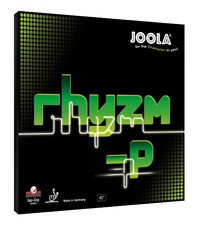
Review of JOOLA Rhyzm 425Actually I can only confirm the response before me. I currently play with Donic BF M3 on my BH anf JP01 on my FH. I'm currently experimenting with Joola rubbers like MAXXX 500 and Rhyzm (48). Rhyzm has many gears and decent control. Not as springy like M3 and has a lower throw angle, but only took some minutes to calibrate. Attacking heavy backspin balls was a bit harder for me, because the hardness of the sponge. So maybe I try an used 42 to see, how good it is. But I will also try a JP02 for my BH, because M3 is slow (but great control).Sep 05, 2014 | |||
 |
JOOLA Rhyzm-P
|
||||||||||||||||||||||
Review of JOOLA Rhyzm-PThis rubber incorporates the modern attacking game with many loop variations. Works well with stiff and elastic blades. It has a softer sponge, so counterspins have to be timed well. To be honest this is a fine, but not an outstanding modern rubber that goes well with the modern plastic and the old celluloid balls. One thing is outstanding, the control of the rubber. In modern competitive play, this rubber is mostly for the BH.Nov 21, 2017 | |||||||||||||||||||||||
 |
JOOLA Dynaryz ACC
|
||||||||||||||||||||||
Review of JOOLA Dynaryz ACCHi All! I couldn't wait after reading your reviews to give this rubber a try. For me JOOLA was always a german brand, that has a more innovative side, also their rubbers most of the time missed the point. But when I heard, that there is this now DYNARIZ ACC, that feels softer, I had to try. Also there is already a german rubber, that feels softer, it is called DONIC Bluefire M1, one of my favourite rubbers. I tried the ACC and an M1 new sheets on a YinHe V14. They have the same characteristics if we speek of dynamics. The topsheet is clearly different, the ACC is a bit more rigid and feels a bit more direct. Compared to the M1 on lighter strokes, the rubber requires a good contact, otherwise the ball will fall down into the net. But if you have good contact, the throw angle is high enough (medium) to clear the net easily. So to put it short, this is a good M1 variation, that is suited better for the backhand. (T05 like topsheet and the M1 ESN sponge). Like a spin oriented M1. For me the biting effect and the fastness of the rebound is the most obvious differences. In the M1 topsheet the ball has some time to sink in, the ACC will quickly fire the ball (similar to a Xiom Omega or T05 rebound). On the other hand there is the ESN sponge with large and small bubbles, so on less powerful strokes the large bubbles will be compressed, so the sponge will get activated. This is why the sponge feels like it is ~44 degrees hard. There are a group of people, who don't like this behaviour, because the whole covering is not linear. Indeed it has an unique feeling and it also has a very good feedback feeling. You can feel the smallest deviation in your stroke. So the control of this rubber is very good, if I consider that it is hard, than I could say it is outstanding. UPDATE: my only prblem is boosting, after 3 months the throw angle will be terribly low and it must be thoroughly reboosted. Rubber surface is quite ok regarding abrasion.Sep 12, 2022 | |||||||||||||||||||||||
Kokutaku (1)
 |
Kokutaku Blutenkirsche 868 Tokyo (Hercules Black Sponge Pre Tune)
|
||
Review of Kokutaku Blutenkirsche 868 Tokyo (Hercules Black Sponge Pre Tune)The rubber is currently approved as Kokutaku Blutenkirsche 868 Tokyo in LARC 2020A. If the ITTF logo is present it does not need to have a license number to be a legal rubber. Usually if the topsheet or base version is approved and there are different sponge variations, the base version license is still applicable to the variants.Oct 27, 2022 | |||
Nittaku (1)
 |
Nittaku Fastarc G-1
|
||||||||||||||||||||||
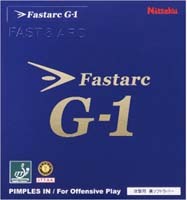
Review of Nittaku Fastarc G-1I gave this rubber a try and indeed it is a really nice rubber. It can do all, if you are thinking loop based attacking game. It has decent control and many gears. The catapult effect is low, which makes it a safe rubber when playing over the table. But I found it slow when looping, and a bit inconsistent when counterlooping. Also it is a bit slow. My alltime favourite is the Bluefire M1 and this rubber has some areas, where it is clearly better, but due to it's speed it is simply not as aggressive and not as efficient. If you are a looper, who likes to control the game, this is an insanely effective rubber.Feb 09, 2021 | |||||||||||||||||||||||
Palio (6)
 |
Palio AK 47 Red
|
||||||||||||||||||||||
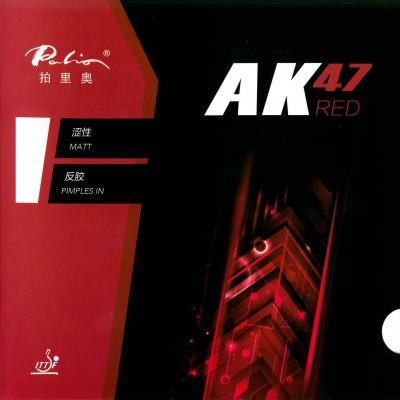
Review of Palio AK 47 RedHi All! Not so long time ago, my inner equipment junkie self settled down with Donic Bluefire M1 on my FH side. With Donic Bluestorm Z2 out I tried that one too, but unfortunately I lost my love towards Z2 due to reasons listed on it's product review page. And also I went to try some chinese made but good FH rubbers. So I came across this AK 47 RED version. To be honest I loved the T05's bite on the ball, but I don't have enough time and skill to fully utilize that rubber. I loved MX-P but felt it a bit numb and unpredictable on counterloops. M1 was a perfect alternative to that, was a bit livelier, than MX-P, and the feeling was better. I will make my comparison to these rubbers. The rubber was tested on an ALC OFF blade.So AK 47 RED feels a bit lighter on the blade than M1 or MX-P. It did not require any transition or modification from me or anyone that I showed the blade. They stated that the rubber feels lively (compated to Tenergy 05/05FX) and easy to play. The ball touch feels a bit more rigid than T05 and a bit harder than M1, but less softer than MX-P. Bouncyness is tricky, because the catapult effect is reduced, but the spin sensitivity is high, like a Baracuda level. Serves are very spinny, because the tad less catapult effect it is easier to keep short. In other areas there is nothing special to say. This rubber plays like a modern attacking rubber fully comparable to any european modern tensor. Loops are really loaded with spin. Some of my opponents mentioned, that their flight curve is less predictable. It is a tad slower than the MX-P. I tried the unboosted version. After 20 hours of play The rubber shows no signs of usage. Black max on standard 151x159 butterfly head is 44g. The overall scores from other players are a bit extreme, because I think they compare this rubber with true chinese rubbers. This is an euro/jap rubber. Apr 26, 2018 | |||||||||||||||||||||||
 |
Palio HK1997 Gold
|
||||||||||||||||||||||
Review of Palio HK1997 GoldThis is a very good Euro/Chinese hybrid FH rubber. It is lightweight compared to a traditional chinese FH rubber, also a bit more livelier. I play Euro/Jap rubbers and I had no problem playing with this rubber. Only some things to mention, there is no catapult, which can come handy in some situations. The loops require a bit more effort than usual. The rubber is a very solid consistent blocker and looper. The spin is very good and more than enough to be compared to modern tensors. The price is insane, but the downside is the sponge, which is fragile and wears out quite fast. So that means don't reglue it after 3-4 months, just tear it after 6 months and get a new one as the sponge will get rigid and tear and crack. You will notice a huge performance loss after 5 months and you will stuggle with that dead sponge. Boosting will not help that much as the weight of the rubber will increase more, than the restored playing characteristics. Overall, this is a suprisingly good rubber, for me it is good for both sides, but keep in mind that I would recomment getting 3 sheets (or pairs) for a whole year. Even if you buy 3 for a year the price is very low.Aug 01, 2019 | |||||||||||||||||||||||
 |
Palio AK 47 Yellow Sponge
|
||||||||||||||||||||||
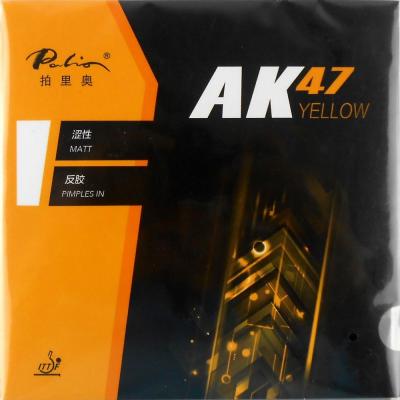
Review of Palio AK 47 Yellow SpongeThis review will be short, becuse I ordered this Yellow paired with a RED version. Compared to the RED, Yellow is a tempo slower a bit more inconsistent and less speed. Only advised maximum 2 meters away from the table as loops will not make it to the other side. So I only recommend it if RED is a bit too much for you and you need a bit slower verion. Price and quality is good, only bear in mind not to reglue it often and for the best performance change it after 4 months to a new one.Aug 01, 2019 | |||||||||||||||||||||||
 |
Palio CJ8000 Provincial
|
||||||||||||||||||||||
Review of Palio CJ8000 ProvincialHi All! I play with euro/jap tensors like Bluefire M1, Omega V Pro, Fastarc G-1, MX-P, VegaX. Speed is like an M2 or Omega V Pro. The tackiness is like a Bluefire JP, so it can lift the ball, but can't hold it. Topsheet is soft and the sponge is medium hard. Spin is really good, and the tempo is quite satisfactory. There is only a slight catapult effect on the rubber, so short game is really controlled, thanks to the stickyness. Flat hits are not as good, compared to euro/jap rubbers as the ball goes into the net quite easily. On loops the sponge must be engaged otherwise the ball will fall into the net. So compared to euro/jap rubbers a more open angle was necessary. To get the clear picture, the best feeling of the rubber was when counterlooping, and hitting the ball right after the top of the bounce, when it starts to descend. Then you can feel you engaged the whole rubber and the sponge and you will get decent speed and spin without 100% commitment/force. My problem was with the racket angle and the force to be applied. Over the table low bounce counterloops are a really hard with this rubber, you are better off with a dropshot or a flat smash. You must hit in the descending phase of the ball with this rubber. In several trainings I could not hit a counterloop over the table or kill a lob after bounce, because the ball goes into the net. I tried to open my racket to engage the sponge, but then the sponge kincked in and my balls went high and long. So for over the table shoth, where you can only touch the ball in a sharp angle a lot of force is needed to get the CJ8000 engaged to produce high throw angle. So who like chinese rubbers and are adapted to them, but want a decent tempo (even in euro scale) should really try this rubber. Serving is really good as you can/must put in a lot of force in your stroke as the rubber won't kick the ball away. The rubber is 60g uncut (with factory glue) and 40g cut and glued to the blade (Yinhe/butterfly size 159*151 mm).Mar 02, 2021 | |||||||||||||||||||||||
 |
Palio Blitz
|
||||||||||||||||||||||
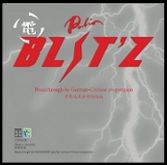
Review of Palio BlitzHi guys! I gave this rubber an overall score of 8 only because it is not cheap and there are better or same rubbers, that are cheaper. This is a german ESN rubber. I got a red 42.5 degree hard one and it perfoms just like a Baracuda Big Slam but with an updated sponge. So like an Acuda P2 with a Baracuda topsheet. So this is not a chinese style rubber this is a true euro/jap rubber, that represents a standard and good quality. Blocking, looping, counterlooping was very enjoyable. My only problem is the price, in my country, the most expensive Joola and Donic rubbers cost the same. So here I can buy a better rubber for the same price. But if you live in a country where these/other brands are quite expensive, give this rubber a try, because it is good, without any shortcomings. The 42.5 version is ideal for ALL+ to OFF- play. When cut on blade the max thickness 42.5 hard weighs around 45 gramms (159x151 mm Butterfly/YinHe head shape).Mar 02, 2021 | |||||||||||||||||||||||
 |
Palio Aeolus
|
||||||||||||||||||||||
Review of Palio AeolusI tested a pair of Palio Aeolus rubbers, one black and one red, both with the 47.5° sponge in MAX thickness.Although Palio is a Chinese brand, the Aeolus is made in Germany by ESN, just like the older Palio Blitz. To me, it feels like a further development of the Blitz: essentially a European-style tensor rubber sold under a Chinese brand name. In terms of playing characteristics, it reminds me most of the Tibhar Aurus and the original Donic Acuda series. The topsheet feels medium-firm rather than genuinely hard, with a familiar Acuda-like touch. The sponge has relatively large pores—larger, in my impression, than those of the Aurus or Acuda, although not quite like a Bluefire M1 or an Evolution MX-P. An early Andro Hexer might be a reasonable comparison. Fortunately, I did not get the strange two-speed sensation that I experienced with the Bluefire M1. The Aeolus behaves more consistently, without that sudden, hard-to-predict change in response. Despite its nominal 47.5° sponge, the complete rubber feels somewhat softer than the number might suggest. Contact is pleasant, and delicate touches and drop shots are surprisingly easy to control. Overall, this is a classic European offensive tensor: comfortable, capable and fairly uncomplicated. It does pretty much everything well enough, without really standing out in any particular department. That is not a criticism of its quality. It is a genuinely good, versatile rubber that could suit players ranging from ambitious hobbyists to competitive players. It is also not particularly picky about the blade: I could see it working on all-wood blades as well as inner- or outer-composite constructions. Oct 13, 2026 | |||||||||||||||||||||||
Sanwei (2)
 |
Sanwei Target National
|
||||||||||||||||||||||
Review of Sanwei Target NationalAre you searching for a boosted and a bit softer H3? Well look no more, because here is your lucky saviour the Sanwei Target National. Just to be clear I play with Euro/Jap attacking rubbers, so when judging speed I will compare it to euro rubbers. This is a slowish rubber, I could hit a loop with my full power and I was not able to do a longshot. It has a speed similar to a Bluefire M3. Which is not enough if you pair it with an OFF-/OFF blade. I noticed that my balls are not that spinny like with an M1 or a Palio AK47 RED or even an M3. Only fine brush loops gave huge spins, but there were not enough power in those shots. While playing with this rubber was very fun, it is very consistent, I was able to perform all my techniques I find it a bit lacking in aggressiveness. So if you are an all out cannon do not buy this. If you like to play with your spins and placements or if you are a hobby player I would recommend this. Very easy to use and also fun.Aug 01, 2019 | |||||||||||||||||||||||
 |
Sanwei Target Pro Blue
|
||||||||||||||||||||||
Review of Sanwei Target Pro BlueHello All. I have tested the SANWEI Target National before and I liked it, despite being an Euro/Jap player. I gave this rubber a try. I had some experience with YinHe Big Dipper, Tibhar MX-S, Palio HK1997 Gold, Palio CJ8000 Provincial. This rubber has a decent speed (40 degrees), it is easy to dig the ball into the sponge. As reactive as the CJ8000 Provincial. The topsheet has some tackiness, but it can only lift the ball, but can't hold it. Compared to BigDipper it was much more easy to play with. With chinese rubbers over the table flat shots often fall into the net when hit with Euro/Jap technique. This rubber was not different, but it was easy to handle and adapt to. As I don't play with chinese rubbers a lot, all I can say, that this is a comfortable and fast FH rubber from SANWEI. Compared to the Target National, this one is harder, less sticky and a bit more "chinese". I could play the Target National without any adaptation, but it was slow for me.Mar 24, 2021 | |||||||||||||||||||||||
Three Sword (1)
 |
Three Sword Red Dragon
|
||||||||||||||||||||||
Review of Three Sword Red Dragon2019 AUGUST!! I had to redo my section here, I have tired all 3 variants of the rubber: The OLD (as in the picture for the product), the new BLACK sponge and the new ORANGE sponge. All of these rubbers are ITTF approved, they are light. Paired with a 92 g butterfly headshape blade, the setup is 174 gramms. The new version topsheet is very good quality. The OLD is a cheap T64 clone with a very low throw angle. So you have to be really careful when playing against pushed or chopped balls as lifting them up is a real pain. Pair this OLD rubber with a flexible allwood blade and it should be a decent hobby player setup. The NEW versions are less spinny. The BLACK sponge has a bit more control and a bit more spin than the ORANGE, but playing loops freely is a really hard to do element. With the NEW versinons, over the table smash based game can be played effectively. They are not as spinny as the OLD one, but when counterhitting and smashing they are very fast. To be clear the ORANGE is faster than a boosted M1 when smashing. Also their spin tolerance is very high so they are ideal for blocking. So if you like to stand close to the table and do some aggressive flat hits and you don't really bother with extra spinny loops this is a very powerful weapon. For counterlooping and loopdriving this is a very good rubber also. The sponge is a bit blunt, but if you have enough force in your shot it will be quick as lightning. The new versions also suffer from low throw angle, not as low as the OLD one, but still. So lifting up heavy underspins and doing some risky openups are not worth the effort. Alwasy keep the risky balls above the table and smashdrop your opponent or do a fast countersmash or counterloop with these rubbers. If this is your style I recommend it, but if not, this rubber will punish you.Aug 01, 2019 | |||||||||||||||||||||||
Tibhar (2)
 |
Tibhar Evolution MX-P
|
||||||||||||||||||||||
Review of Tibhar Evolution MX-PCan't add more then below comments. Better than T05.Mar 15, 2015 | |||||||||||||||||||||||
 |
Tibhar Evolution EL-P
|
||||||||||||||||||||||
Review of Tibhar Evolution EL-PHi All!I had the opportunity to play with this rubber for more than six months now, usually 8 hours a week including routine training, free play and competitive events. I used it on two blades Donic Waldner World Champion '89 and Butterfly Liu Shiwen on my BH (MX-P on FH). I tried the rubber unboosted and boosted too. First of all the tubber has a nice faint red small pored sponge that is medium hard. The topsheet feels grippy but not tacky. The rubber has a medium throw with a tempo, but the dwell time is very nice. I would love to say that it is comparable to the Donic Bluefire M2 rubber. To compare them I must say, that EL-P is a tad faster, less dwell, lifts less, bit more harsh and lower delltime. To compare it to the Butterfly Tenergy 64 I can clearly say, that T64 has a bit more control and a softer feel, yet the speed is the same. This feeling is due to the EL-P-s harder topsheet maybe. To clarify the scale of these differences, that I highlighted, they don't really matter if you are playing a spin oriented attacking game. When it comes down to passive play and fine touching the ball M2 behaves the most forgiving, while EL-P is the less forgiving, but to point it out again if you hit your balls with average technique these differences will not matter. Blade selection is an important factor for a rubber and vica-versa. EL-P is working fine on flexible blades like Liu Shiwen and does not feel mushy on stiff blades like Waldner World Champ '89. When we speak of durability, my etalon is MX-P and older sheets (2010) of Tenergy 05-s. With this routine I mentioned I could play a year and a half with occasional re-boostering the sheets happily and effectively. Well EL-P wears off a tad faster, when the top layer of the rubber sheet gets used. This time some boosting has to be done, and at the same time the rubber surface most be given a thin layer of oil, to regain some grip. After treatment the sheet is ready to go for 2-3 months. Jul 20, 2016 | |||||||||||||||||||||||
Xiom (2)
 |
Xiom Vega X
|
||||||||||||||||||||||
Review of Xiom Vega XCurrently I am searching for less spin sensitive rubbers for my FH and I came to this rubber. Some say, that it is an upgrade to the Vega Pro. Usually I play modern looping/attacking rubbers on my FH (Like M1, Omega V PRO, MX-P). I was searching for a fact, but bit less spin sensitive and forgiving gear. So this rubber has a soft upper rubber, that absorbs the ball and helps to get a prolonged contact during your hit. But when you engage the sponge it simply explodes. This rubber is fast. The general throw of the rubber is flat, but it always clears the net, I did not have to alter my technique from them M1 to play with this rubber. When you loop, the throw angle can get really high. This is a really stable rubber, mainly for FH. Cut down to standard butterfly head size it is 53 g. Compared to the modern tensors it does not have a huge spin potential, it is only decent. On the other side, this rubber is simply a confidence booster, it has insane amount of controlled speed paired with resistance to incoming spin. If your game is about (fast) looping and counerlooping and quickly playing the ball out of the reach of your opponent, this rubber will help you to do that. The price is really good, the durability is also good. Maybe this is not recommended generally to pro players, because of the lack of monster spin, but every intermediate player should check it out if it suits their playing style.Feb 09, 2021 | |||||||||||||||||||||||
 |
Xiom Omega V Pro
|
||||||||||||||||||||||
Review of Xiom Omega V ProMy current backhand rubber. I love the black sponge it looks cool. I could write pages from this rubber, but to put is short and simple. This is a really good T05 alternative. It is slower, than the T05, but faster, than the T05 FX. It feels hadrer and less springy, than the T05. The rest is the same. For it's price it is an outstanding rubber.Feb 09, 2021 | |||||||||||||||||||||||
Yinhe (Galaxy/Milkyway) (2)
 |
Yinhe Moon
|
||||||||||||||||||||||
Review of Yinhe MoonSome say, this rubber is a tenergy 05 clone with 70-80% identity. To be honest, this is a soft chninese rubber, not even close to an euro rubber. Maybe it is 70% but the lack of springiness is disturbing, the rubber feels dead. Nice for backhand (black). The red for forehand is slow. Maybe for starters. For this price it's not a bad rubber, quite durable too.I will try to boost is to see, how it will preform, it may turn out to be a good training rubber. (testing on a Zhang Jike blade) Oct 31, 2017 | |||||||||||||||||||||||
 |
Yinhe Big Dipper
|
||||||||||||||||||||||
Review of Yinhe Big DipperI tested the 39 degree variant as I gathered, this is not the trues chinese style version. I tried it boosted and unboosted. The rubber cut down to butterfly headsize is heavy (more than 50 gramms). When boosted it is even heavier. I use Euro/Jap rubbers an wanted to try some chinese FH rubbers. This rubber is a very decent equipment, there is tempo there is spin. Naturally serve receiving and ball handling is easier with the slightly tacky topsheet. Overall on FH most loops demanded much more effort to be fast and spinny at the same time. Dropping was easier, but the main downside of this rubber were smashes. It was really hard to get them over the net, and because you have a good touch with this rubber you can force many high balls, that are more easy to smash, then loop to win. Overall I find this rubber a good, very good H3 alternative, from the H3 neo this is an upgrade and it is a substitute to higher variants of the H3. Also please consider Palio HK 1997 Gold.Aug 01, 2019 | |||||||||||||||||||||||

About
Founder StoryBlog
Shop
Retailers
Dictionary
Contact
© 2026 Flipspun Inc.
Formerly the Table Tennis Database


